Thursday, 7 July 2016

An alternative guide to the history of pop music - Part 5 - The 2000s

The 2000s

There are various themed bars dotted about the place that celebrate certain decades in music.  There’s ‘Flares’ which just plays music from the 1970s, ‘Reflex’ which plays only 80s music and ‘Boom’ which plays 90s music.  Now we’re in the... erm... tens... I've not noticed the same sort of nostalgia for the 'noughts' as there was in the late nineties for the eighties. 

A lonely child waiting in the park
There are no 00s bars around which just play music from the 2000s. Probably because it was a nondescript decade and didn’t see any new styles of music or throw up any interesting sub-genres. Every decade since the 1950s has been distinguishable in pop music by the fashions, styles, musical production values, and legendary exponents such as Elvis, Queen, Michael Jackson, The Beatles and H from Steps; strong identity in the music and stars who you wanted to be.  

We will always remember him as our favourite member of Steps
In the 00s, all they had was autotune so that literally anything that could make a discernable noise could become a pop star (e.g. The Crazy Frog).  Most music was by now produced electronically using loops and software which was becoming so cheap, it was possible for anyone to make a song at the touch of a button. Gone were the days when you had to win a record contract and spend months in an expensive studio honing your songwriting skills and having to tour the country touting your wares.  As a result, Calvin Harris is now famous as well as Mark Ronson and Will.I.Am (a descendent of Henry VIII.I.am). YouTube was responsible for Justin Bieber which is the main reason it should be discontinued immediately so it doesn’t happen again. I thought history was supposed to help us learn from our mistakes?

 
Justin Bieber during his 'Middle Aged Woman' years
At the beginning of the decade, a lot of 90s artists were still hanging around, such as Britney Spears, Christina Aguilera and the Backstreet Boys. Travis were still churning out dirges and the likes of Dido and Keane were plodding along, doing their best to add some half-decent pop songs to the landscape. Hip Hop was dominant however with human smartie and rap-experiment gone rogue, Eminem outselling most and song-talkers Jay-Z, Snoop Dogg, Missy Elliott, Young Jeezy, Ludacris and Kanye West (yes we can) were taking over not just the charts but also the world and everything in it so they could use their videos as cheap adverts for products their production companies also sold. 

It's nice of Beats to let Jessie J be in their video
You’d think that because rappers became more about the beats than the music, they’d have a chance to work on their lyrics to say something poignant or relevant. Well, you’d be wrong as the lyrical quality of rap/hip hop plunged to deeper depths than anyone thought possible. If the lyrics weren’t disrespectful to women, then they referenced how much money the rapper had and their videos were filled with scantily clad women who were apparently there because the wanted to be there and were dressed exactly how they wanted to be dressed, encircling several rappers dripping in jewellery and shiny track suits with massive trainers on, making gestures to the camera, sneering and fully believing they were surrounded by women because of the rappers’ attractiveness and amazing personalities.

 
They continued doing what this man parodied, but with straight faces
Avril Lavigne was flying the flag for rock in the early part of the decade whilst Fall Out Boy were shielding the flame of punk with just their hands in a metaphorical wind tunnel. Snow Patrol looked to have a promising career at one point too without ever really reaching the kind of heights they might have had they existed in the 90s. The White Stripes were a bit odd; nobody knew whether that was Jack White’s sister on the drums or not and spent most of their live performances thinking about that instead of listening to his random screechings.

'Yallrite Sis? I mean, wife... er... second cousin?
TV Talent shows started to appear in the 2000s with Pop Idol, X-Factor, Fame Academy and American Idol winners all going on to have varying degrees of success. Simon Cowell singlehandedly destroyed the race for the Christmas Number One until Rage Against the Machine broke the cycle and made over £100k for charity in the process. Emo broke into mainstream culture too in the 00s, but he soon got bored and went back to Sesame Street. No, hang on - that’s Elmo.

 
The original Emo
The Killers were referred to as a retro-80s revival act as were their contemporaries ‘The Bravery’ but neither sounded like they belonged in the 2000s or the 1980s. The Darkness tried to resurrect what Queen were doing twenty five years earlier and Feist did a fair impression of Steeleye Span to modest success.  Boybands disappeared entirely in the mid-00s with ex-boyband members such as Justin Timberlake and Ronan Keating having solo success. Girl Groups were almost entirely represented by the Pussycat dolls (who don’t really qualify as a musical ensemble), The Sugababes (whose line-up changed daily) and Girls Aloud (who were cobbled together in a TV raffle).

The current Sugababes line-up
Pink’s career started off slowly, singing soul and bitter ballads before going all pop and rock with ‘Get the party started’ and ‘Don’t let me get me’ before going all shouty in ‘So what’ and then writing every single song since then about her break up with her husband. Anastasia, who was the product of scientists finally getting Taylor Dayne to work properly, broke loads of speakers with her powerful voice in 2004.

Anastasia v1.0
Jennifer Lopez was described by some in the 00s as a triple threat.  She threatened our ears with her voice, threatened our laughter reflexes with what she called ‘dancing’ and then threatened our eyes and sanity with her acting. Nelly Furtado was like a bird in 2002 and a Maneater in 2007. Maybe she was a Vulture all this time? Janet Jackson, Madonna and Kylie Minogue managed to stay relevant and the Spice Girls broke up after clinging on to their last crumbs of fame by a finger nail after Geri Halliwell left. They all had number one singles as solo artists except poor Victoria who couldn’t sing and had to get help from Dane Bowers, bless her.

 
One of the greatest singers ever to be born on 28th November 1979 in Sutton and David Beckham's Wife
Bands who played their own instruments were trying desperately to help us all hold onto hope for the future of popular music with the likes of Artic Monkeys, Franz Ferdinand and Kaiser Chiefs consistently hitting the top 20.  Kate Nash also had hits despite singing in her natural accent which was a cross between Cockney and Australian. Oasis broke up in 2009 - hooray! If the music died when Buddy Holly's plane crashed, God knows what was happening to it whenever Noel Gallacher opened his mouth.  U2 continued into their fourth decade and continued to leave bands like Coldplay and Muse languishing in their slipstream.
70's tribute act and music torturer, Liam or Noel Gallacher
Children’s music started to become popular as both High School Musical and Hannah Montana got into the charts like a dirty protest. Sean Paul (despite letting us all know his name several times in all his songs) had some success in the Reggae genre.  His hit ‘We be burnin’ never really let us know why he be burnin.

 
Why you be burnin'?
Grime became popular for the first time since the coal mines closed in the 80s, with artists such as Dizzee Rascal and Tinchy Stryder singing or rapping or whatever. A man going by the name of ‘Example’ got a bit shirty on TV when someone asked ‘What do you do?’ and he stroppily explained that he was a ‘singer’.  No evidence of this claim exists however so we just have to take his word for it.

An 'Example' of someone with no discernible talent, making lots of money from 'music'
Duffy thought it was a good idea to dip into the 60s for the production on her hit ‘Mercy’ and subsequent singles. Joss Stone also revived ghosts of the past with her Janis Joplin impression whilst Corrine Baily Rae, Amy Winehouse and Adele had some success with proper real music and some proper real singing.

One of the reasons the 60s stayed in the 60s
The 2000s can be summed up as a disappointment by looking at who was named Billboard artist of the decade.  Previous winners were the supremely talented Elvis Presley, The Beatles, Elton John, Michael Jackson and Mariah Carey.  The 2000s honour went to Eminem and destroyed any credibility the list had previously engendered.

 
LOOOOOOOOOOOOL!!!!!
The saddest moments of the 2000s came when S Club 7 and Atomic Kitten split up but it wasn’t all bad news as Jo O’Meara and Liz McClarnon had solo careers that lasted 18 minutes and 13 minutes respectively.

 
Liz there, regretting everything she's ever done
By the end of the decade, pop was being strangled by the likes of Katy Perry (who said she kissed a girl but she didn’t really), Lady Gag-gag (who asked us to poke her face - gladly!) and Justin Bieber (whose hair had more personality than he did). Michael Jackson released his last studio album ‘Invincible’ in 2004 and then sadly passed away in 2009.

And we'll never see the likes again...
Rihanna massacred ‘Tainted Love’ for her hit ‘SOS’ and then trampled all over ‘Wanna be startin’ something’ on her hit ‘Don’t stop the music’.  Flo Rida metaphorically urinated on ‘You spin me right round’ on his hit ‘Right round’ and even Britney Spears had to dip into history to have hits with ‘My Prerogative’ and ‘I love rock and roll’. Alien Ant farm covered ‘Smooth Criminal’, Madonna shredded ‘Gimme Gimme Gimme’ in her hit ‘Hung up’ and even today, it’s impossible to find a song in the top 40 that hasn’t got a sample or cover of a song from at least ten years ago. Worse was to follow in the 10s.

This is an excerpt from the book 'The worst pop lyrics in the world EVER!' by Peter Nuttall.  Available in Paperback and on Kindle here :
Barnes and Noble
Amazon


Saturday, 2 July 2016

An alternative guide to the history of pop music - Part 4 - The 1990s


The 1990s

Music began to evolve in the 1990s away from contemporary straight-laced pop into fusions of different genres. Urban music had offshoots which blended with soul, jazz and funk to create new jack swing, neo-soul, hip hop soul, g-funk and whatever Martika has started doing after she went to Prince’s house one afternoon. 

Martika, in the kitchen
Grunge became popular because people couldn’t be bothered to wash and comb their hair. Britpop happened and everyone wished it hadn’t. Then there was the emergence of industrial rock (produced in massive factories) and alternative rock emerged alongside it. Electronic music gave rise to trance (what happened to you when you listened to more than 15 seconds of it), Techno (which was cool until that bloke from 2 Unlimited shouted the word eighty times in one of his songs), happy hardcore (two words which should never have been put together), drum and bass (which are two instruments most bands have had since the 1920s) and trip hop (which taught us to always tie our shoelaces before attempting to go anywhere on one foot).

2 Unlimited, the wilderness years
In the 90s, The Red Hot Chilli Peppers sang ‘Under the Bridge’ but nobody could hear them so they started performing in theatres instead. There were more shouty bands around such as Linkin Park, Pantera, Sepultura and Pearl Jam. Marilyn Manson also decided to make us all feel a little bit uncomfortable with his one weird eye but the antidote to all this was Alanis Morissette who was herself ‘a bit shouty’ but could enunciate so it was clear what she was angry about (ex-boyfriends mainly).

What's known as 'A bit odd'
Alanis and Sheryl Crow paved the way for more female singer-songwriters to emerge such as Tori Amos and Lisa Loeb (a 90s Nana Mouskouri). Bryan Adams released ‘Everything I do’ which despite containing the same graceful and intricate rhyming couplets as a deaf woodlouse would write, stayed at number one for fifteen years.  Shania Twain (the female Bryan Adams) also released what some called ‘music’ but it didn’t impress me much.
Never trust a man who plays guitar in the woods
Madonna made us all gag when she released the album and art project that was ‘erotica’. Anyone who experienced any of that went immediately to have a wash, paying particular attention to their eyes and ears with powerful soap. Something similar happened when Celine Dion released ‘My heart will go on’ though people decided to squirt cavity wall insulation in their ears until the song stopped being played everywhere.

What's known as 'a little bit odd'
It seemed people couldn’t get enough of buying bland music. As mentioned before ‘Everything I do’ by Bryan Adams topped the charts for far longer than it should, ‘I will always love you’ by Whitney Houston stayed at the top of the chart for a bazillion weeks and Wet Wet Wet had to stop production of their record ‘Love is all around’ because even they couldn’t stand it being number one for another week.  They, as we did, wanted Right Said Fred to have a chance. Whitney and her contemporary Mariah Carey brought Gospel music to the masses and gave every single female X-factor contestant something to murder in their auditions for the next twenty years.
 
I can't sing, but I've got a great back-story.
Urban Adult contemporary music was also born in the 90s through artists such as SWV, Mary J. Blige, Toni Braxton, Brandy, Monica, Brandy and Monica, R. Kelly, your Kelly, my Kelly, Sean Combs, Puff Daddy, Puffy, Diddy, P. Diddy and Boys II Men (who later became just ‘men’).  Being ‘retro’ became cool and the use of old songs to make new music was prevalent in the 90s (as was the practice of one artist ‘featuring’ another, as you’ll see).  ‘U can’t touch this’ by MC Hammer ‘sampled’ the song ‘Super Freak’ and ‘Ice Ice Baby’ made use of the riff in the Queen song ‘Under Pressure’.  Other aberrations of this practice include, ‘Jump Around’ by House of pain, ‘Mo money Mo Problems’ by Notorious B.I.G., ‘Killing me softly’ by the Fugees, ‘I’ll be missing you’ by Puff Puffy Diddy Daddy FEATURING Faith Evans, ‘Gangsters Paradise’ by Coolio FEATURING L.V.,  ‘Hey Lover’ by Boyz II Men FEATURING LL Cool J and every single song Will Smith has ever released.


For the early part of the 1990s, everyone wanted to move to Madchester, despite it not existing. The Happy Mondays made it cool to spend all your money and time on ‘recreational substances’ and end up with no teeth and a brain that’s always about three months behind your mouth. 

Apparently, it was all worth it
The Stone Roses also adopted the ‘cool’ look of having your eyes half open, crouching a bit on the spot whilst murmuring into a microphone about pretty colours and imaginary friends. Oasis continued this ‘green anorak-parker-thing’ look into the mid-90s but ‘borrowed’ heavily from the Gallagher’s parents music collection of 70s glam rock and 60s Mersey-beat so much so they might as well have called themselves The Beat-Slade-Rex-les.

Beatles tribute act, Oasis
The mid-90s for most people was a Blur where they Preached on Manic Street, wore Suede, beat themselves to a Pulp with Verve on some Super-Grass whilst wearing Shell Suit bottoms with an Elastica waist band. However, we’re all still waiting in anticipation for the Boo Radley’s follow up single to ‘Wake up it’s a beautiful morning’.

Jarvis Cocker and some other people who may or may not have been in Pulp
Pop music still held a firm grip on the world’s attention by the end of the 90s with the Backstreet Boys achieving massive commercial success and Britney Spears asking us to hit her one more time. The Spice Girls set the foundations for both Britney and Christina Aguilera to come along and sing lots of innuendo-laden yet purportedly innocent pop music. Backstreet Boys were closely followed by NSYNC (including a fluffy haired Justin Timberlake), girl group ‘Hanson’, Jennifer ‘from the block’ Lopez and Destiny’s child. Cher returned with a wobbly mechanical voice on her song ‘Believe’ making us all ‘believe’ that she’d taken the plastic surgery too far and had in fact been made into some kind of immortal robot.
An android from the future
The Corrs proved that you could still get in the charts with a violinist in your band (most notably following Dexy’s Midnight Runners) and with the lead singer playing the penny whistle and the one at the back playing the bodhrán now and again. Robbie Williams left Take That and had a solo career which was even better, then co-wrote ‘Angels’ which he modestly introduced at his live shows as ‘a really really good song, this’. There was a Seal in the charts at one point too along with Milli Vanilli who didn’t actually do anything other than dance about a bit and mime. Boyzone were a kind of ‘Diet’ Take That, again proving that you only need two people in a group of five who can actually sing. Then Aqua came along and killed everything Kurt Cobain, Freddie Mercury, James Brown, Marvin Gaye and Tina Turner had worked so hard to build when they got to Number One with ‘Barbie Girl’. It proved that novelty acts still had a look-in and variety was still the spice of the charts with acts as diverse as Sinead O’connor, The Cranberries, Los del Rio, The Prodigy and Roxette competing for chart space.
 
I just want to be your friend
Music began to die when computers took over the world in 1998, or at least allowed people with no musical ability to make tunes happen in their bedrooms.  Moby started the trend along with ‘White town’ and his/her single ‘Your Woman’.  It started the decline of people with discernible talent in the music industry and led us to where we are today, with DJs ‘making’ the music with computers instead of playing it on their turntables after it had been performed by actual people with actual talent and actual musical instruments. Culprits include Paul Oakenfold, Sasha and Pete Tong who ironically made everything go a bit ‘Pete Tong’ in the charts. 


This became famous somehow
Meanwhile, back at the ranch, Garth Brooks was tearing up the record books for album sales and concert attendance with his honky-tonk ways and songs about heartbreak, loneliness and mamma’s hot apple pies. Thanks to Garth’s intervention, ‘boot-scootin’ boogie’ was on the rise and line-dancing took over the world, metaphorically. We all had an ‘Achy Breaky Heart’ at one point and we were all asking ‘How do I live without you’ whilst concurrently stating that ‘You’re still the one’ but eventually along came The Mavericks and ruined the entire decade for everyone. Also, Dr. Alban, Scatman John and Haddaway happened so we’re just going to have to accept it.


It's a Scooby-dooby-doooby-scooby-dooby-mel-o-dee
In other news, Australia gave us more Kylie (not that we asked for it), Natalie Imbruglia (another soap actress), Tina Arena (who sounds more like a venue than a person), Savage Garden (which sounds like an awful place to look at butterflies) and Peter ‘ooh, look at my tummy bits’ Andre.  Thanks Australia, no really. Oh, and New Zealand gave us a band called OMC. How Bizarre!

Thanks very much the 90s, no really, thanks a lot


This is an excerpt from the book 'The worst pop lyrics in the world EVER!' by Peter Nuttall.  Available in Paperback and on Kindle here :

Barnes and Noble
Amazon


Tuesday, 28 June 2016

An alternative guide to the history of pop music - Part 3 - The 1980s

1980s
 
The 1980s ushered in a couple of new genres of music.  One was a contraction of Disco, which became ‘Dance’ music and the other was a soundtrack to a novel way of greeting someone with a wiggle of the hand called ‘new wave’.
 
New Wave
Flares and massive pointy collars were no more but there were more men wearing make-up. Electronic music enjoyed a rise in popularity as did so called ‘Thrash’ metal which was the strange practice of strumming an electric guitar with as many effects on it as possible, as fast and as loud as possible.  To be taken seriously whilst making all this noise, it was necessary to have a band name which conjoured up images of awful things; ‘Slayer’, ‘Megadeth’, ‘Anthrax’ and ‘Bucks Fizz’ all became popular somehow. Synthesizers were all the rage after all of Depeche Mode got one for their birthdays.  This bleepy bloopy music then gave way to Electro, Techno, House and Whigfield for which none of us can ever forgive nor forget.
 

How exactly are you playing that keyboard solo?
One thing the 80s got right was variety. It seemed that if you played an instrument or could sing a little bit, you had a chance of getting into the top 40.  You could find almost any genre of music in the top 40 in the 1980s, not just pop and rock but reggae, R&B, hip hop, soul, glam rock, folk. singer songwriters, boy bands, girl bands, country, novelty acts, puppets, TV Theme tunes, instrumental film scores and St. Winifred’s School Choir. Even a Flock of Seagulls managed to get into the charts. 
 
They got their name when they all started fighting over a chip on the ground at the seaside
Michael Jackson ruled in the 1980s as the King of Pop, Madonna took the title of Queen of Pop whilst Prince also released some music.  MTV started showing pre-recorded promos of people doing things whilst singing their songs. They weren’t just standing on stage singing, these promos had a kind of story line like a short movie set to music.  They called these things ‘videos’ and prompted the group ‘The Buggles’ to release a song called ‘Video killed the radio star’, which was the first musical murder mystery.  Michael Jackson released ‘Thriller’ and made a ridiculously long video to go with it which involved werewolves and zombies.  He was the first to do this although people thought Motorhead were first but as we know, the werewolves and zombies were actual members of the band. 

 
"You're standing on my ingrowing toe nail!!!"
At first Madonna was ‘like a virgin’ but by the end of the decade she was ‘like a prayer’. Teen pop had been prevalent in the 60s but only little Jimmy Osmond flew the flag in the 70s for the genre until Debbie Gibson and Tiffany inspired teenagers everywhere to go and put too much make-up on, get a stupid haircut and sing songs in their local shopping complex.

"I think we're alone now" ... "No, there are literally hundreds of people staring at you"
Duran Duran started the trend of calling your band the same word twice. The The, Mr. Mister and Talk Talk copied off them, but not Wet Wet Wet, they took it too far, as usual. Boy George bought two lizards in the 1980s; one was always angry so he wrote a song about the calmer Chameleon.

"I simply can't do a thing with it"
Beat boxing originated in the 1980s and led to many people embarrassing themselves in public and sampling was also pioneered in this decade. It was used to tell us all that sol sol sol sol salt and pepper’s here.  

U2 weren’t the biggest band in the world in the 1980s, that accolade went to Earth, wind and fire who had 14 people in the band at one point. Genesis took over the charts in the 1980s with the band itself having many hits, Peter Gabriel and Phil Collins having many solo hits, Mike Rutherford scoring hits with his other band ‘Mike and the Mechanics’ and Tony thingy recording a song with Nik Kershaw in his garage.  George Michael (by himself and with Wham! (in which he was also the sole musician)) scored hits (including six number ones) in many genres in the 1980s.  He tried his hand at pop, soul, rap, disco and whatever genre ‘Faith’ is.

"Cos you gotta have face-a face-a face, I gotta have face-a face-a face-Ah!"
Band Aid begat Live Aid which begat Sport Aid.  Enya managed to sell eleven million albums. The Bee Gees managed to stay relevant. The Pet Shop Boys introduced us to a kind of rapping that your dad can better when he’s drunk on the song ‘West End Girls’ but saw it get to number one. After the success of ‘Take on me’ because of ‘that’ video, A-ha continued sketching all their pop videos until we all started ignoring them.

Morten, looking a bit sketchy
To sum up the 80s in one sentence, it was the decade of acceptance, a decade where you didn’t have to be good looking and didn’t have to have a particularly good voice, just a catchy tune and a quirky message.

However, we also allowed Kylie Minogue to torture our ears so maybe the 80s weren’t as good as I remember.

The future of popular music


This is an excerpt from the book 'The worst pop lyrics in the world EVER!' by Peter Nuttall.  Available in Paperback and on Kindle here :

Barnes and Noble
Amazon


Sunday, 26 June 2016

An alternative guide to the history of pop music - Part 2 - The 1970s

The 1970s

The 1970s allowed us all to dip our disco biscuit in the tea of music.  Genres such as Funk, smooth jazz and jazz fusion emerged whilst Soul remained as popular as it had been in the 1960s. In the previous decade, someone had accidentally broken an amplifier to discover distortion which in turn gave rise to rock music. This had morphed into punk rock by the end of the 70s but that soon disappeared to everyone’s relief. In the newly discovered Rock genre we had to put up with glam rock, hard rock, progressive rock and heavy metal.

Two absolute legends and a man
Reggae was a lovely way to escape the bland cheap-suited crooners who sat on stools with impossibly skinny microphones singing about their dead dogs and what not. Bored with guitars, pop pickers’ interest was pricked by the emergence of the synthesizer and Gary Numan emerged from the darkness like a scary robot with his single ‘Cars’ which was all about being in his car.

Not best met in a dark alley
Guitars, long hair and sweaty men were the order of the day when looking for something loud and incoherent to listen to in between sandwiches on a Saturday afternoon.  Status Quo, Led Zeppelin, Black Sabbath and Kiss were all fabulously enthusiastic after getting kicked out of their respective homes for making too much noise as youngsters. They discovered that people enjoyed this cacophony of random too-loud sound and so went and made louder sounds in Stadiums and on stages in large fields. Prog rock introduced audiences to keyboard and guitar solos that started in the 70s and are still going on to this day with no real coherent point. Punk seemed like a necessary evil; it was awful to listen to but a lot of artists played it in order to get record contracts when it was popular and then go off and make the music they wanted to make with the big royalty cheques. The aforementioned Gary Numan played punk against his better judgement, as did The Police in order to sneak in the back door of a record label unwilling to listen to what they could actually do.  Blondie sort of made punk ‘listenable’ but not really until they became a pop/ska band.

Irony or something
Pop songs were few and far between in the 70s, being gently caressed but never mounted by groups such as the Bay City Rollers, The Osmonds, Queen, The Carpenters and The Jackson 5. There were some comedy solo artists (who I’m sure didn’t mean to be funny) in Leo Sayer, Barry Manilow and Engelbert Humperdinck (which isn’t his real name, the weirdo). 

Tom Selleck singing 'Please Release Me'
Barbra Streisand shouted her way into the charts but not in the same way the Sex Pistols did, and Carly Simon continued the trend of having massive hair (see also Rod Stewart, Donna Summer and Lionel Richie).

How much hair is too much hair
The members of Fleetwood Mac all had loads of fights with each other and then released ‘Rumours’ which was the best-selling album of the 70s. Don McLean wrote ‘American Pie’ about Buddy Holly.  Roberta Flack wrote ‘Killing me softly’ about Don McLean’s song about Buddy Holly.  Thankfully, nobody wrote a song about Roberta Flack writing a song about Don McClean writing about Buddy Holly. Sadly, Bruce Springsteen became popular, as did Paul Simon despite throwing an ego-fuelled hissy fit about Art Garfunkel getting all the credit for ‘Bridge over troubled water’ even though he didn’t write it.

"Get off" ... "I'm not touching you" ... "Well, who is?"... "Me. I lied."
Diana Ross sang ‘Ain’t no mountain high enough’ and unleashed this now clichéd phrase on almost every song ever written ever since. Stevie Wonder became immensely popular in the 1970s and helped funk become a defined genre on its own merits.  Where James Brown had pioneered, so Kool and the Gang made sure the genre would die before the end of the decade.  Marlon Jackson and his other four brothers who I forget the names of, conquered the charts as the Jackson 5.  ‘I want you back’, ‘ABC’ and ‘I’ll be there’ all smashed the top 10 and helped launch the galactic solo career of their lead singer, Jermaine.

Jermaine thingy.
Willie Nelson wasn’t just a banned wrestling hold, it was also a popular country music artist and Nashville legend. Along with luminaries such as Glen Campbell and Tammy Wynette, country music was dotted all through the chart places in the 70s. This was helped by the continual repeats of Clint Eastwood films on TV on Sunday afternoons. Olivia Newton John, Marie Osmond and Kenny Rogers all pretended to be country artists at some point and managed to fool country fans into buying their records.

Willie Nelson, who has always been and will always be in his 70s
Olivia Newton John went as far as being voted vocalist of the year by the Country Music Association in 1974. This alone throws the entire genre into question. In fact, if someone had just twanged a comb on the side of a table and called it ‘country’ it would probably have been gratefully accepted. It enraged some country fans however, especially Hale and Pace who eventually let their anger go in the late 80s by singing ‘Let’s stonk, to the rhythm of the Honky Tonk’.

A pair of complete stonkers
Charlie Rich (who himself wasn’t a country artist but managed to get into the country music charts and win artist of the year at the CMAs) got so angry at non-country artists crossing over from other genres, that he set fire to the envelope containing that year’s winner, John Denver’s name (another non-country artist) at the CMAs in 1975.  That’s like a cat in a dogs home kicking off because another cat wants to come into the dogs home because the cat outside isn’t a dog (or something). Dolly Parton decided to stop all this nonsense once and for all by going fully ‘pop’ with her hit single ‘Here you come again’, thereby ending the feud, sort of, or something.

If anyone would, Dollywood.
The 1950s came back into fashion and at long last, people started wearing Teddy Boy outfits, greasing their hair back, dressing like thin-Elvis and playing double basses with their fingers.  The Stray Cats led the revival and Queen even had a stab, releasing ‘Crazy little thing called love’.  The movie ‘Grease’ went stratospheric being as it was full of 1950s kitch but the craze soon died out when Showaddywaddy stamped their ‘Butlins’ version of the fad on the top 40. It of course led to genuine 1950s and 60s artists coming back into fashion.  Ricky Nelson, Neil Sedaka and ‘Grease’ singer Frankie Valli all came back to the charts in a slightly different form. 

One of the objects in this picture is a huge mistake
Of the very sparse selection of pop music in the charts in this decade, Elton John and Abba were the two biggest exponents.  Everyone fancied the blonde one out of Abba but also wished he would shave his beard off.  The Beatles had broken up in 1970 and they all went on to have solo success. Paul formed Wings but everyone wished he hadn’t, John and George both had hugely successful solo albums and Ringo Starr. Pink Floyd’s pompous concept riddled mash of unrelated sounds, ‘Dark Side of the Moon’ remained in the charts for 741 weeks and sold over 50 million copies, somehow. It’s also cited as one of the greatest rock albums of all time, somehow.

Welcome to the most tedious hour of your life
Rock went all Pantomime when David Bowie decided to dress up as a futuristic space hero hell-bent on eradicating a race of mutant spiders who lived on Mars. Roxy Music thought it was a good idea, as did Marc Bolan although in their music there were more cars and abstract concepts than spiders.  Then glitter rock vanished, trampled on by bands like The Clash and the Sex Pistols who themselves vanished three years later when they all went their own ways.

Apparently this is how to live your life
The Bee Gees were single-handedly responsible for people wearing a white suit with a waistcoat combo, strutting down the street and pointing to the floor and ceiling alternately. John Travolta also had some input in that. As did the writer of the film ‘Saturday night fever’. And the bloke who invented the light-up disco floor. Oh, and the person who discovered ‘Wah Wah’.

Well you can tell by the way I use my wok, I'm a Chinese chef, no time to talk
The success of Bob Marley and Prince Buster allowed a reggae pre-cursor to rise to popularity among skinheads. ‘Ska’, which is Jamaican in origin and was first heard in the 1960s, was everywhere by the late 70s and had people with no hair pogoing about like they didn’t need their ankles tomorrow.  It led to the band ‘Men without Hats’ writing the song ‘Safety Dance’ as they’d been prevented from pogoing in the comfort of their own local pub one night. 2 tone bands of the late 70s combined old skool ska with melodies, faster tempos and elements of punk rock. The Specials, The Beat and The Selecter all embodied the genre before Madness took off like a helium aeroplane. If you look closely, you’ll find it very difficult to work out where the 70s ended and the 80s began - unless you also incorporate a calendar which shows December 1979.

"Hilarious" band, Madness.  As mad as a box of Prozac.
 
This is an excerpt from the book 'The worst pop lyrics in the world EVER!' by Peter Nuttall.  Available in Paperback and on Kindle here :
Barnes and Noble
Amazon


Saturday, 25 June 2016

An alternative guide to the history of pop music - Part 1 - 1950s and 60s

The inception of the pop charts and the 1960's
 

The popular music charts began in 1940 when the popularity of a song was gauged by sales of sheet music.  We can all agree there’s plenty of sheet music around these days but it all seems to get in the charts somehow.  The music magazine Billboard had the idea of compiling a chart based on sales which was then updated in 1952 when someone decided the best way to listen to music was to get someone else to play it and sing it and put it on a kind of plastic disc so you could listen to it whenever you liked instead of having the band come round and perform the song in your front room.
 

Hello? Dean Martin? Are you in there?
Back then it was called the Top 12! Twelve songs complied by ringing twenty record shops to find out what the best-selling songs that week were.  ‘Here in my heart’ by Al Martino was awarded the very first top spot, a song about ventricles, and began the tradition of listing things for no reason.  Other magazines got involved by 1955 basing their charts on postal returns or telephone polls.  Then album charts started somehow and the NME, Record Mirror and Melody Maker were all getting involved.  The upshot was, people were being told what everyone else thought was good music, namely the public, the radio stations and the record stores, but mainly the latter two.  It didn’t seem to matter what the singers were waffling on about, songs about how love hurts or how love is the greatest thing ever using lyrics written with crayons were flying up the charts and making songwriters stupidly rich. 
 
Chart topping cutting edge wailing
The 60’s is probably best known for the twangy guitars and tinny production of rock and roll, beat and pop music.  The Beatles were the forerunners of course, making monk’s haircuts fashionable for the first time since the Vikings invaded. The Monkees tried to copy but only two of them had a monk’s haircut and so were doomed to failure.
"We're not allowed to play our own instruments! Ha ha ha ha."
Skiffle became a novel way of utilising old kitchen equipment and brought success for the likes of Lonnie Donegan. Liverpool was a hotbed of music with over two bands touring the local clubs and ballrooms, using Buddy Holly as inspiration. The Beatles got good in 1962 and allowed other bands who wanted to be them, but weren’t quite as good, to get into the charts too such as Gerry and the Pacemakers, The Searchers and the Swinging Blue Jeans (getting their band name from the contents of their washing line on a windy day). 
Some bands were better than the Beatles but for whatever reason, didn’t have as much success; bands such as The Kinks and the Yardbirds.  The Rolling Stones emerged as a rival, sporting different but equally silly haircuts. Barber shops up and down the country had never been so busy. "I want to hold your hand" was a lovely title for a song and a very respectful thing to say to a lady.  Towards the end of the 60's, out went Fats Domino to start a pizza shop, Chubby Checker (who despite his name, never checked chubby people) and even Elvis began to struggle in this new rock and roll tidal wave.
 
Elvis, contemplating a white jump suit, massive sunglasses and a cheeseburger
Rock music began to splinter by the mid-decade into various genres.  Psychedelia was one of those, based on making your mind ignore reality with or without the ‘help’ of various chemicals.  Sitars and surreal lyrics became the identity of the genre as well as weird noises, hidden messages and atmospheric effects.
 
This is all Bob Dylan could see for the entire decade
Folk music came back to life for a moment and gave people like Bob Dylan, Joni Mitchell, Leonard Cohen and Gordon Lightfoot a reason to get out of bed in the morning. ‘Protest songs’ were the in-thing even though people also protested against protest songs although I’m not sure if they wrote songs about their protests against protest songs as that would have been hypocritical.
The sound on The Byrds’ ‘Mr Tambourine man’ was obtained with a 12 string guitar, which in my opinion is far too many strings. Folk rock reached the peak of its popularity in 1968 before it tailed off into country rock and various other denominations of rock music. The first psychedelic rock song was called ‘hesitation blues’ and it was a song nobody was sure when to start playing.  The Doors became popular and opened for many acts, they also closed for some too; sometimes however, they were just ‘ajar’. Psychedelia had its last hurrah at Woodstock in 1969 and was never heard of again.
 
Worst Drive-in Movie Ever!
The music we associate most with American teenagers in the early 1960s is surf rock; something that usually results in your surf board being broken in two and you upside down in a rock pool. ‘Movin’ and Groovin’’ by Duane Eddy was one of the first surf rock songs and despite many other Californian surf rock bands popping up, the Beach Boys not only played the music, they named themselves after somewhere you can actually surf! Genius. 
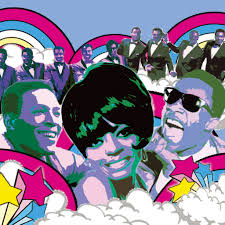
Pop music was as superficial as ever with hits like ‘The Twist’ and the ‘Locomotion’ getting us all on the dance floor to do weird angular upper body movements and songs such as ‘Sugar Sugar’ which sparked the term ‘Bubble-gum pop’. Motown emerged as a pop answer to soul music and one of the greatest genres of music was born. A never ending string of number one singles followed for The Supremes, The Miracles, The Temptations, The Four Tops, Martha and the Vandellas, Marvin Gaye and the Jackson Five
 
The sad thing about Motown is that there'll never be anything as good ever again
Sam Cooke was flying the flag for soul and James Brown was bringing funk to the masses. The beginnings of disco music can be heard in the Supremes song ‘You keep me hanging on’.
Television brought country music into people’s homes and raised its popularity. Records by Loretta Lynn, Glen Campbell and Tammy Wynette were flying off shelves in local record stores. Marty Robbins managed hits in country, western, pop, blues and Hawaiian (that’s straight pop whilst eating some  ham and a pineapple). Johnny Cash became one of the most influential musicians of the decade (and most other decades for that matter) recording in many styles, genres and prisons. Dolly Parton came down from the mountains in Tennessee to capture the hearts of a nation with her biographies set to music.

And then, it was over.  1970 came along and ruined everything...


This is an excerpt from the book 'The worst pop lyrics in the world EVER!' by Peter Nuttall.  Available in Paperback and on Kindle here :

Barnes and Noble
Amazon