As a lifelong Star Wars fan, I couldn't wait to see The Last Jedi and successfully managed to avoid all the spoilers before seeing it. So, if you haven't seen it, look away now because I'm going to be talking about stuff that will completely spoil the film for you.
When I came home from seeing the film yesterday, I took a few hours to calm down and then started reading some fan reviews. Whilst some people were expressing similar levels of excitement and disbelief as me, quite a lot of people were saying how unnecessary the plot involving Canto Bight was - that the film was too long and could have been trimmed down. Of course it's all about opinions but I think on the surface, yes - that scene seemed to have little or no purpose in the grand scheme but if you look at where they are, who is there, what they do, what they find out and what it means, that entire part of the plot is so well crafted and planned out, it gives the rest of the film context.
Whilst I'm no social commentator I've got my opinion on why I think the scene in the town with the casino was there. Finn is the Han Solo of this new trilogy - his motivation was always to try and get as far away from the fight as possible only to get caught up in it and fight alongside the rebels even though he strictly isn't one. Rose catches him trying to escape - with good intentions of course but she has such a high opinion of him, it was important that he live up to that, and he does eventually. Anyway, they fly away to the casino planet to try and find a master code breaker who can help them board Snoke's ship so they can disable the tracker enabling the last remaining rebel ships to escape. This is where they're despatched to Canto Bight and where, in the opinion of some fans, the story gets slow and off-track. Here's why I think it's so important.
1. Good people do bad things without realising it
Before they land on the planet, Rose tells Finn that they're about to go to a place which is filled with the worst people in the world. This casts your mind back to Mos Eisley which was a hive of villainy and scum. Canto Bight is the exact opposite, filled with rich people with upper class values, complaining that someone has parked their space ship on their private beach. It turns out that most of the people here have made their money from selling weapons to The First Order; the spoils of war. If you think about it, most of these people will be related to those who are profiteering, unaware of the consequences, unaware of what else is going on in the galaxy. They're here eating fine food, living in luxury, playing in casinos and drinking the most expensive drinks they can order. They don't care about rebellions or Jedis or the Dark Side or any of that. That's where they've been brought up, that's how they live, that's all they know. In real life, we buy goods based on how nice they look or how well they do a job; we're not bothered who made it or how it was made or how it affects the environment or who was exploited to create it for us. We buy it and use it and then throw it away. Most of us try and recycle for instance but sometimes we put things in the wrong bins. I think there's an element of this in Canto Bight. Under the surface is a very powerful message about slavery. Children being sold into servitude. We see it in Anakin and his mother being 'owned' by Watto. We see it in Rey being sold to the guy who owns the junk yard. And now, in this scene in the Last Jedi we see children looking after the beasts they use for racing.
Rose asks Finn to look closer - he does so through the binoculars and sees them mistreating the animals and the children. All so the rich people have races to watch and bet on. The rich people don't care that this is happening under their noses, or maybe they do but there's nothing they can do about it because it's accepted practice. People who are essentially not bad people but they're condoning bad things without realising it. This entire scene is here to remind us that the universe isn't all about Snoke, Luke, Rey and Kylo - it's a huge place which has many different stories going on, some of which aren't directly linked but affected by the decisions being made elsewhere.
2. What is freedom?
They go looking for the code breaker and end up getting caught. They're thrown in prison where they meet DJ who says he can do the job for a price. He gets them out, BB8 causes a bit of mayhem and confusion and then Rose stops one of the stable hands from sounding the alarm by showing him her rebellion branded ring. The boy stops and agrees to help. This, in my opinion is such a huge moment especially as we see at the end of the movie that this boy has force powers and could well be where the story picks up in the new trilogy - a new generation. Once they decide to use these huge llama-horse things to escape on, it does get a bit 'Wacky Races' but again, it's showing how resourceful they are, how they're not afraid to try anything for the cause and eventually when they reach a cliff edge, dismount and almost accept defeat. Finn comments that the beasts are now free as the herd gather over on the plain. Rose says no, cuts the saddle from the last beast and then tells it to join the herd, saying 'now it's free'. It ties into something DJ says to them; 'Be free, don't join'. This entire sub-plot is about freedom and I think will tie in to the future of the Jedi now that Rey is going to be the face of the new band and that she now fully appreciates the subtleties of freedom of choice. We also see that Finn believes these rich people selling weapons to be horrible and unethical, DJ shows him that not only do they make weapons for the First Order, they also make weapons for the Rebels - making their money out of war. So do their ethics even come into it?
3. Plans never go wrong
I might be wrong but whenever a big plan is made in Star Wars, they always pull it off in some way. This to my recollection is the first plan I've seen go wrong and they have to come up with a Plan B. Whilst DJ gets them onto Snoke's ship and to the tracker in order to disable it - he's cut a deal with the First Order (a lot like Lando in Empire Strikes Back) and betrays them. Now, whilst characters have been caught by betrayal before, and caught trying to lower the shields in Return of the Jedi, they always managed to get back to their main plan and achieve it. In the Last Jedi however, they get caught and never manage to disable the tracker. On the surface it makes you wonder what the point of the whole thing was - but you find that out when Finn sees Phasma's eye through a crack in her mask he almost feels a sense of pity until she says 'You were always scum' and he regains his resolve and replies 'Rebel Scum'. In that moment you see him commit to the cause in a way you never sensed Han Solo ever did. He's all in now and that's confirmed when you see him about to sacrifice himself by flying directly into the cannon to blow it up later.
4. Save what you love
The last point to make is about the relationship between Rose and Finn. She was always attracted to him because of his supposed status as a rebel hero - which he himself denies - but he lives up to that label and more by the end of the film. In some ways I feel Finn is the centre around which the entire trilogy will roll. It was his humanisation of the Storm Troopers that I feel will become central to Episode IX, where perhaps more storm troopers will defect with Finn as their focal point. Anyway, Rose sees Finn about to make that sacrifice but she crashes into him and stops him from doing the ultimate deed. She then tells him that they shouldn't be destroying what they hate but saving what they love and then she kisses him. This thread goes all the way back to the casino planet story. They've connected so deeply throughout their mission together. It reminds me a lot of the Guardians of the Galaxy scene with Peter Quill and Gamora, where they talk about Kevin Bacon. A quiet scene away from the hubbub of fighting and explosions where the characters actually get brought to life so you can see what makes them tick; why they're in the story at all and why you should care about the decisions they're making.
That's my humble opinion as to why Canto Bight was so important to the film overall, I'd love to hear yours. Is The Last Jedi the best of all the Star Wars movies - if not, why not?
A blog about random thoughts, the world, coffee, music, computer games and anything else that occurs to me which might be worth about 1000 words when I should be doing something else.
Sunday, 17 December 2017
Sunday, 30 July 2017
Stuff and Things about... The Doctors' Waiting Room
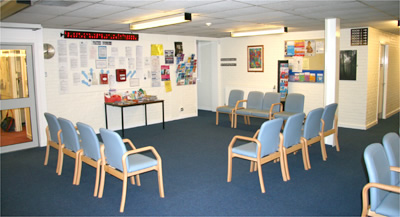
Stepping through the fancy automatic doors the first thing you'll be overwhelmed by is the blast of hot air which typhoons down from a big metal fan above the door which looks a lot like a 1960s storage heater. This blast is only discernible in a 5cm-wide area just inside the door. The next thing to overwhelm you is the smell of what you assume is either medicine or disinfectant but turns out to be the lunch that all the receptionists have decided to eat at the same time, leaving the desk completely unmanned for an hour.
![]() |
| Nobody will ever know the purpose of the 'air curtain' |
Once reception is manned again you will then have to try and attract the attention of a receptionist. This is more difficult than you think. A polite cough won't cut it. Clicking your fingers in their face is frowned on as is accidentally knocking over a nearby pot plant or their cup of tea. An air horn usually does the trick however, causing them to twitch mildly and eventually look up at you. Once you’ve given the receptionist all of your personal details, darkest secrets and literally, a blood sample, you will be asked to take a seat to await your name being called over the tannoy. This can take from 5 minutes to 5 years so it’s a good idea to try and find something to read. Luckily there is a collection of dog-eared home interiors catalogues, celebrity gossip magazines from 1998 called ‘Now!’ and ‘More!’ which should really be called ‘Then!’ and ‘Less!’. The magazines are so old and well-thumbed that there is a possibility you’ll catch a new medical complaint off them by the time you’re called for your appointment.
![]() |
| Everything from 'Horse and Trout' to 'Knitting Weekly' |
There's a plethora of medical advice posters around the walls too, unless you’re in one of those modern surgeries which have gone to the bother of installing a 40 inch plasma TV on the wall and instead of streaming Sky Sports or showing a recent blockbuster film, they show stills of people getting their blood taken and warnings about ingrowing toenails.
If you're bored you could always investigate the toys in the corner which have been put there to stop the toddlers tearing around the room, screaming and wiping the contents of their noses on your trousers. The toys however are more disturbing than the posters explaining what the animals that live in your eyelashes look like. There'll be a haunted stuffed panda with one eye and something which you assume is a large plastic bee with a blown-up human face and an expression that suggests it's last encounter with a child didn't end well.
It’s a good idea to try and find a chair at least two chairs away from anyone else, just in case you catch everything everyone else has got which means you’ll have to come back the next day for that complaint, whilst catching everything everyone in the room has got ad infinitum. The chairs in doctors' waiting rooms have been scientifically designed to ensure you cannot find a comfortable way of sitting on them. (Whatever the opposite of ergonomics is) This is designed to make it easier to spot the people who have come in to get their haemorrhoids looked at.
It is not socially acceptable to ask the other people in the waiting room what they’re ‘in’ for. It is acceptable however to wait for each person to be called in turn and to try and guess what their complaint is by the way they walk. One fun game to play is trying to cough more dramatically than the last person who coughed to try and convince everyone else in the room that you are the most ill person there today.
When your name is finally called, everyone in the room will now know that you are called Spaldie McFloof. If you don’t want people to know that's your name however, you could try waiting a few moments and then getting up slowly, so as not to alert anyone, then wander off in the direction of the toilet - taking a sharp turn towards the GP's office once out of sight. This will be negated immediately by someone emerging from a nearby corridor who will yell ‘Spaldie McFloof’ several times before you have to agree that’s you, which is far worse than just getting up the first time your name was called.
![]() |
| This just screams comfort and security, doesn't it? |
Monday, 15 August 2016
Athletics (A Primary School Guide)
Good intentions
You are allowed three attempts at the long jump before you are disqualified for forgetting to jump, jumping too early an crossing the white line with a foot.
As with most
teacher-led activities, the motives and goals are perfectly reasonable;
however, the manner in which these goals are pursued often leaves a lot to be
desired. Athletics has always been a minefield of danger and necessitates the
use of extremely dangerous equipment such as javelins, spiked running shoes,
shot putts and long jump sand pits (which after heavy rain, can take on the
properties of quick sand). Ironically, athletic pursuits are usually undertaken
with the participants' long-term health as a main concern but also with the
faint hope that one of the pupils will represent their country in a certain
discipline and endow the teacher who introduced them to it with a boast they
can recount at dinner parties for the rest of their lives.
Each activity brings
its own unique set of risks to the participants' health and safety, not least
of which the rule of participating in just your pants should one forget one's
P.E. kit. The sight of a skinny twelve-year-old boy attempting the hurdles in
nothing but a pair of Spiderman Y-fronts and a Bay City Rollers
vest can cause those of a sensitive disposition only the very deepest of mental
scars (not least of which, the underpant-wearing hurdler).
100m
The 100m sprint is usually undertaken
on a course which is well short of the internationally accepted distance for
this event, which is 100 metres. The races are run in
'heats'; the teacher uses his mouth instead of a starting pistol and never
calls a false start. Six runners compete for the right to partake in round two,
which will be less than 4 minutes hence, meaning the competitors have yet to
regain their breath. Those unsuccessful in the opening heats can be found at
the local shops during subsequent heats.
200m
The rules for the
'two hundred metres' are simple; explained by teachers to those taking part as,
'run to that tree and back'. This essentially means the participants must run
the entire length of the one hundred meters track (around forty six metres)
then stop and run back again. The dynamics of this sport are open to
manipulation as those who are lagging behind during the running 'to' section
will inevitably stop short of the end, turn and start to run 'back', in effect
taking the lead. As the supervising teacher cannot be bothered to walk forty
six metres to the end of the track to ensure those taking part do not cheat,
those who have completed the first '100 meters' will turn to see that everyone
else has cheated. The disaffected runner finds that they are able to run faster
than they thought, not because of their desire to win, more their desire to
rugby tackle the cheaters.
1500m
The fifteen
hundred metres is another way of saying, 'run around that field for as long as
you can without passing out while I go to the staff room and have a child-free
half-hour and a hot beverage'. The winners are the ones who crack the teacher's
code and go to the shop for a ten pence mix-up instead.
110m Hurdles
Essentially, this
race is exactly the same as the one hundred metres except the course is strewn
with the bodies of those who cheated in the two hundred metres. Sometimes the
teacher uses plastic hurdles, one of which is destroyed the moment Tommy
'Slapbag' Higgins attempts to leap over it, catching his foot, ripping the top
bar clean off which hits him in the face causing him to fall to the ground,
mangling the rest of the hurdle frame as he does so.
4 x 100m Relay
Though the metal poles used in relay
races seem innocuous enough, they are often used as weapons in the wrong hands.
It is therefore wise not to be on the same relay team as someone with a grudge
against you. The teacher will tell you that the best way to hand the baton on
to your team mate is to slap it into their hand as hard as you can. This is
deemed by said person with the grudge as a licence to use the baton for any
sadistic practice that comes to mind. It does make the person running the
second leg run faster, though in these circumstances the changeover rarely
takes place in the allotted
'change over zone'.
Discus
Before you pick up and throw a
discus for the first time, it should be explained that it is nothing like a
Frisbee. It is made of the heaviest wood known to mankind and edged with steel.
Discuses are extremely rare and if you were (un)fortunate enough to attend a
school which had one in the P.E. cupboard then it's likely you only ever threw
it once, as the bones in your wrist would all have changed places and it would
have been several months before you were able to wave again. As you need to be
at least fifteen years old before you can even lift a discus, finding that you
have prowess in the discipline is unlikely to nudge all the other things you've
already discovered that you're good at aside and allow you to become an Olympic champion.
At school, anyone who is able to throw it more than twice the length of their
arm is recommended to the local amateur athletics organisation.
Hammer throw
This event is
four times less likely to happen in P.E. as it is to happen in woodwork class.
In the 1970's, it
was commonplace to find a group of kids playing with bricks and glass on a
patch of waste ground, grazing their knees and rubbing them in the soil until
they'd stopped bleeding. These days, the government recommends that we send our
children into the street wrapped in Styrofoam with a first aid kid strapped to
their backs. This charade of safety conscious melodramatics has led to a
decline in the standard of British javelin throwers. If a school is in
possession of a Javelin, it is unlikely that it will ever see the light of day
and participants may find themselves instead, launching blunt pencils and
Savaloys across the sports field. Another thing that discourages people from
learning Javelin is that once you've thrown it seventy odd metres, you have to
go and fetch it. You won't find many people volunteering to stand at the far
end of the field ready to catch it and throw it back.
Shot Put
Far from being
excited at the prospect, those participating in this seemingly futile practice
will spend the first five minutes of P.E. wondering how anyone thought
launching a big metal ball into the air with one hand was a good idea. Those
brave enough to attempt picking the 'shot' up soon realise that once they have,
they must stagger to a circle of sand within which the 'shot' can be 'putted'. Those who opt
out of this event can be found round the back of the sports hall having a game
of giant metal marbles.
![]() |
| We've all got a shot put face |
Long Jump
Success in the
Long Jump very much depends on the school's facilities for staging such a
discipline. Those with mainly asphalt surrounds may find the number of
participants declining with each jump. The Olympic standard for this event is
to have a very long runway, at the end of which is a thin white line and a sand
pit. Anybody of above average ability in this event at school will find that
they have cleared the two foot sand-pit and spread themselves on the wall just
beyond it. The participant must run as if chased by the
most terrifying thing their imaginations can create and then launch themselves
at an angle of around forty-five degrees towards a patch of sand. A common
mistake is to concentrate too hard on running as fast as possible and then
forget to jump. Another common error is to jump too early in an attempt to
ensure a foot doesn't cross the white line and then land before said white
line, recording a 'leap' of minus thirty six centimetres.
Triple Jump
High Jump
The high jump employs the most curious of all sports
artefacts; the crash mat. Every six-year-old that lands on one, vows to have a
room filled with them when they grow up and buy their own house. Like landing
on a combination of angel feathers, kittens' eye-lashes and a nice warm hug,
the crash mat is the only thing that makes the high-jump an attractive sport.
Only two methods of clearing the bar have ever been used at the Olympics; the
scissor leg style and the Fosbury flop, in which the athlete jumps over the bar
backwards. In P.E. however, anything that gets you over the bar is acceptable.
Jumping headfirst seems to be the most popular method, followed by attempting
to 'hurdle' the bar. Some participants think it is perfectly acceptable to
throw themselves under the bar; as long as they hit the crash mat
without dislodging the bar, a legal jump can be claimed.
Read more 'Playground Olympics' in the paperback book of the same name here:
Thursday, 7 July 2016
An alternative guide to the history of pop music - Part 5 - The 2000s
The 2000s
There are various themed bars dotted about the place that celebrate certain decades in music. There’s ‘Flares’ which just plays music from the 1970s, ‘Reflex’ which plays only 80s music and ‘Boom’ which plays 90s music. Now we’re in the... erm... tens... I've not noticed the same sort of nostalgia for the 'noughts' as there was in the late nineties for the eighties.
There are no 00s bars around which just play music from the 2000s. Probably because it was a nondescript decade and didn’t see any new styles of music or throw up any interesting sub-genres. Every decade since the 1950s has been distinguishable in pop music by the fashions, styles, musical production values, and legendary exponents such as Elvis, Queen, Michael Jackson, The Beatles and H from Steps; strong identity in the music and stars who you wanted to be.
In the 00s, all they had was autotune so that literally anything that could make a discernable noise could become a pop star (e.g. The Crazy Frog). Most music was by now produced electronically using loops and software which was becoming so cheap, it was possible for anyone to make a song at the touch of a button. Gone were the days when you had to win a record contract and spend months in an expensive studio honing your songwriting skills and having to tour the country touting your wares. As a result, Calvin Harris is now famous as well as Mark Ronson and Will.I.Am (a descendent of Henry VIII.I.am). YouTube was responsible for Justin Bieber which is the main reason it should be discontinued immediately so it doesn’t happen again. I thought history was supposed to help us learn from our mistakes?
At the beginning of the decade, a lot of 90s artists were still hanging around, such as Britney Spears, Christina Aguilera and the Backstreet Boys. Travis were still churning out dirges and the likes of Dido and Keane were plodding along, doing their best to add some half-decent pop songs to the landscape. Hip Hop was dominant however with human smartie and rap-experiment gone rogue, Eminem outselling most and song-talkers Jay-Z, Snoop Dogg, Missy Elliott, Young Jeezy, Ludacris and Kanye West (yes we can) were taking over not just the charts but also the world and everything in it so they could use their videos as cheap adverts for products their production companies also sold.
You’d think that because rappers became more about the beats than the music, they’d have a chance to work on their lyrics to say something poignant or relevant. Well, you’d be wrong as the lyrical quality of rap/hip hop plunged to deeper depths than anyone thought possible. If the lyrics weren’t disrespectful to women, then they referenced how much money the rapper had and their videos were filled with scantily clad women who were apparently there because the wanted to be there and were dressed exactly how they wanted to be dressed, encircling several rappers dripping in jewellery and shiny track suits with massive trainers on, making gestures to the camera, sneering and fully believing they were surrounded by women because of the rappers’ attractiveness and amazing personalities.
Avril Lavigne was flying the flag for rock in the early part of the decade whilst Fall Out Boy were shielding the flame of punk with just their hands in a metaphorical wind tunnel. Snow Patrol looked to have a promising career at one point too without ever really reaching the kind of heights they might have had they existed in the 90s. The White Stripes were a bit odd; nobody knew whether that was Jack White’s sister on the drums or not and spent most of their live performances thinking about that instead of listening to his random screechings.
TV Talent shows started to appear in the 2000s with Pop Idol, X-Factor, Fame Academy and American Idol winners all going on to have varying degrees of success. Simon Cowell singlehandedly destroyed the race for the Christmas Number One until Rage Against the Machine broke the cycle and made over £100k for charity in the process. Emo broke into mainstream culture too in the 00s, but he soon got bored and went back to Sesame Street. No, hang on - that’s Elmo.
The Killers were referred to as a retro-80s revival act as were their contemporaries ‘The Bravery’ but neither sounded like they belonged in the 2000s or the 1980s. The Darkness tried to resurrect what Queen were doing twenty five years earlier and Feist did a fair impression of Steeleye Span to modest success. Boybands disappeared entirely in the mid-00s with ex-boyband members such as Justin Timberlake and Ronan Keating having solo success. Girl Groups were almost entirely represented by the Pussycat dolls (who don’t really qualify as a musical ensemble), The Sugababes (whose line-up changed daily) and Girls Aloud (who were cobbled together in a TV raffle).
Pink’s career started off slowly, singing soul and bitter ballads before going all pop and rock with ‘Get the party started’ and ‘Don’t let me get me’ before going all shouty in ‘So what’ and then writing every single song since then about her break up with her husband. Anastasia, who was the product of scientists finally getting Taylor Dayne to work properly, broke loads of speakers with her powerful voice in 2004.
Jennifer Lopez was described by some in the 00s as a triple threat. She threatened our ears with her voice, threatened our laughter reflexes with what she called ‘dancing’ and then threatened our eyes and sanity with her acting. Nelly Furtado was like a bird in 2002 and a Maneater in 2007. Maybe she was a Vulture all this time? Janet Jackson, Madonna and Kylie Minogue managed to stay relevant and the Spice Girls broke up after clinging on to their last crumbs of fame by a finger nail after Geri Halliwell left. They all had number one singles as solo artists except poor Victoria who couldn’t sing and had to get help from Dane Bowers, bless her.
Bands who played their own instruments were trying desperately to help us all hold onto hope for the future of popular music with the likes of Artic Monkeys, Franz Ferdinand and Kaiser Chiefs consistently hitting the top 20. Kate Nash also had hits despite singing in her natural accent which was a cross between Cockney and Australian. Oasis broke up in 2009 - hooray! If the music died when Buddy Holly's plane crashed, God knows what was happening to it whenever Noel Gallacher opened his mouth. U2 continued into their fourth decade and continued to leave bands like Coldplay and Muse languishing in their slipstream.
Children’s music started to become popular as both High School Musical and Hannah Montana got into the charts like a dirty protest. Sean Paul (despite letting us all know his name several times in all his songs) had some success in the Reggae genre. His hit ‘We be burnin’ never really let us know why he be burnin.
Grime became popular for the first time since the coal mines closed in the 80s, with artists such as Dizzee Rascal and Tinchy Stryder singing or rapping or whatever. A man going by the name of ‘Example’ got a bit shirty on TV when someone asked ‘What do you do?’ and he stroppily explained that he was a ‘singer’. No evidence of this claim exists however so we just have to take his word for it.
Duffy thought it was a good idea to dip into the 60s for the production on her hit ‘Mercy’ and subsequent singles. Joss Stone also revived ghosts of the past with her Janis Joplin impression whilst Corrine Baily Rae, Amy Winehouse and Adele had some success with proper real music and some proper real singing.
The 2000s can be summed up as a disappointment by looking at who was named Billboard artist of the decade. Previous winners were the supremely talented Elvis Presley, The Beatles, Elton John, Michael Jackson and Mariah Carey. The 2000s honour went to Eminem and destroyed any credibility the list had previously engendered.
The saddest moments of the 2000s came when S Club 7 and Atomic Kitten split up but it wasn’t all bad news as Jo O’Meara and Liz McClarnon had solo careers that lasted 18 minutes and 13 minutes respectively.
By the end of the decade, pop was being strangled by the likes of Katy Perry (who said she kissed a girl but she didn’t really), Lady Gag-gag (who asked us to poke her face - gladly!) and Justin Bieber (whose hair had more personality than he did). Michael Jackson released his last studio album ‘Invincible’ in 2004 and then sadly passed away in 2009.
Rihanna massacred ‘Tainted Love’ for her hit ‘SOS’ and then trampled all over ‘Wanna be startin’ something’ on her hit ‘Don’t stop the music’. Flo Rida metaphorically urinated on ‘You spin me right round’ on his hit ‘Right round’ and even Britney Spears had to dip into history to have hits with ‘My Prerogative’ and ‘I love rock and roll’. Alien Ant farm covered ‘Smooth Criminal’, Madonna shredded ‘Gimme Gimme Gimme’ in her hit ‘Hung up’ and even today, it’s impossible to find a song in the top 40 that hasn’t got a sample or cover of a song from at least ten years ago. Worse was to follow in the 10s.
This is an excerpt from the book 'The worst pop lyrics in the world EVER!' by Peter Nuttall. Available in Paperback and on Kindle here :
Barnes and Noble
Amazon
There are various themed bars dotted about the place that celebrate certain decades in music. There’s ‘Flares’ which just plays music from the 1970s, ‘Reflex’ which plays only 80s music and ‘Boom’ which plays 90s music. Now we’re in the... erm... tens... I've not noticed the same sort of nostalgia for the 'noughts' as there was in the late nineties for the eighties.
![]() |
| A lonely child waiting in the park |
![]() |
| We will always remember him as our favourite member of Steps |
At the beginning of the decade, a lot of 90s artists were still hanging around, such as Britney Spears, Christina Aguilera and the Backstreet Boys. Travis were still churning out dirges and the likes of Dido and Keane were plodding along, doing their best to add some half-decent pop songs to the landscape. Hip Hop was dominant however with human smartie and rap-experiment gone rogue, Eminem outselling most and song-talkers Jay-Z, Snoop Dogg, Missy Elliott, Young Jeezy, Ludacris and Kanye West (yes we can) were taking over not just the charts but also the world and everything in it so they could use their videos as cheap adverts for products their production companies also sold.
![]() |
| It's nice of Beats to let Jessie J be in their video |
Avril Lavigne was flying the flag for rock in the early part of the decade whilst Fall Out Boy were shielding the flame of punk with just their hands in a metaphorical wind tunnel. Snow Patrol looked to have a promising career at one point too without ever really reaching the kind of heights they might have had they existed in the 90s. The White Stripes were a bit odd; nobody knew whether that was Jack White’s sister on the drums or not and spent most of their live performances thinking about that instead of listening to his random screechings.
![]() |
| 'Yallrite Sis? I mean, wife... er... second cousin? |
The Killers were referred to as a retro-80s revival act as were their contemporaries ‘The Bravery’ but neither sounded like they belonged in the 2000s or the 1980s. The Darkness tried to resurrect what Queen were doing twenty five years earlier and Feist did a fair impression of Steeleye Span to modest success. Boybands disappeared entirely in the mid-00s with ex-boyband members such as Justin Timberlake and Ronan Keating having solo success. Girl Groups were almost entirely represented by the Pussycat dolls (who don’t really qualify as a musical ensemble), The Sugababes (whose line-up changed daily) and Girls Aloud (who were cobbled together in a TV raffle).
![]() |
| The current Sugababes line-up |
![]() |
| Anastasia v1.0 |
![]() |
| One of the greatest singers ever to be born on 28th November 1979 in Sutton and David Beckham's Wife |
![]() |
| 70's tribute act and music torturer, Liam or Noel Gallacher |
Grime became popular for the first time since the coal mines closed in the 80s, with artists such as Dizzee Rascal and Tinchy Stryder singing or rapping or whatever. A man going by the name of ‘Example’ got a bit shirty on TV when someone asked ‘What do you do?’ and he stroppily explained that he was a ‘singer’. No evidence of this claim exists however so we just have to take his word for it.
![]() |
| An 'Example' of someone with no discernible talent, making lots of money from 'music' |
![]() |
| One of the reasons the 60s stayed in the 60s |
The saddest moments of the 2000s came when S Club 7 and Atomic Kitten split up but it wasn’t all bad news as Jo O’Meara and Liz McClarnon had solo careers that lasted 18 minutes and 13 minutes respectively.
By the end of the decade, pop was being strangled by the likes of Katy Perry (who said she kissed a girl but she didn’t really), Lady Gag-gag (who asked us to poke her face - gladly!) and Justin Bieber (whose hair had more personality than he did). Michael Jackson released his last studio album ‘Invincible’ in 2004 and then sadly passed away in 2009.
![]() |
| And we'll never see the likes again... |
This is an excerpt from the book 'The worst pop lyrics in the world EVER!' by Peter Nuttall. Available in Paperback and on Kindle here :
Barnes and Noble
Amazon
Saturday, 2 July 2016
An alternative guide to the history of pop music - Part 4 - The 1990s
Music began to evolve in the 1990s away from contemporary straight-laced pop into fusions of different genres. Urban music had offshoots which blended with soul, jazz and funk to create new jack swing, neo-soul, hip hop soul, g-funk and whatever Martika has started doing after she went to Prince’s house one afternoon.
![]() |
| Martika, in the kitchen |
![]() |
| 2 Unlimited, the wilderness years |
![]() |
| What's known as 'A bit odd' |
![]() |
| Never trust a man who plays guitar in the woods |
![]() |
| What's known as 'a little bit odd' |
For the early part of the 1990s, everyone wanted to move to Madchester, despite it not existing. The Happy Mondays made it cool to spend all your money and time on ‘recreational substances’ and end up with no teeth and a brain that’s always about three months behind your mouth.
The Stone Roses also adopted the ‘cool’ look of having your eyes half open, crouching a bit on the spot whilst murmuring into a microphone about pretty colours and imaginary friends. Oasis continued this ‘green anorak-parker-thing’ look into the mid-90s but ‘borrowed’ heavily from the Gallagher’s parents music collection of 70s glam rock and 60s Mersey-beat so much so they might as well have called themselves The Beat-Slade-Rex-les.
The mid-90s for most people was a Blur where they Preached on Manic Street, wore Suede, beat themselves to a Pulp with Verve on some Super-Grass whilst wearing Shell Suit bottoms with an Elastica waist band. However, we’re all still waiting in anticipation for the Boo Radley’s follow up single to ‘Wake up it’s a beautiful morning’.
![]() |
| Apparently, it was all worth it |
![]() |
| Beatles tribute act, Oasis |
![]() |
| Jarvis Cocker and some other people who may or may not have been in Pulp |
![]() |
| An android from the future |
![]() |
| This became famous somehow |
![]() |
| It's a Scooby-dooby-doooby-scooby-dooby-mel-o-dee |
![]() |
| Thanks very much the 90s, no really, thanks a lot |
This is an excerpt from the book 'The worst pop lyrics in the world EVER!' by Peter Nuttall. Available in Paperback and on Kindle here :
Barnes and Noble
Amazon
Subscribe to:
Posts (Atom)