Sunday, 26 June 2016

An alternative guide to the history of pop music - Part 2 - The 1970s

The 1970s

The 1970s allowed us all to dip our disco biscuit in the tea of music.  Genres such as Funk, smooth jazz and jazz fusion emerged whilst Soul remained as popular as it had been in the 1960s. In the previous decade, someone had accidentally broken an amplifier to discover distortion which in turn gave rise to rock music. This had morphed into punk rock by the end of the 70s but that soon disappeared to everyone’s relief. In the newly discovered Rock genre we had to put up with glam rock, hard rock, progressive rock and heavy metal.

Two absolute legends and a man
Reggae was a lovely way to escape the bland cheap-suited crooners who sat on stools with impossibly skinny microphones singing about their dead dogs and what not. Bored with guitars, pop pickers’ interest was pricked by the emergence of the synthesizer and Gary Numan emerged from the darkness like a scary robot with his single ‘Cars’ which was all about being in his car.

Not best met in a dark alley
Guitars, long hair and sweaty men were the order of the day when looking for something loud and incoherent to listen to in between sandwiches on a Saturday afternoon.  Status Quo, Led Zeppelin, Black Sabbath and Kiss were all fabulously enthusiastic after getting kicked out of their respective homes for making too much noise as youngsters. They discovered that people enjoyed this cacophony of random too-loud sound and so went and made louder sounds in Stadiums and on stages in large fields. Prog rock introduced audiences to keyboard and guitar solos that started in the 70s and are still going on to this day with no real coherent point. Punk seemed like a necessary evil; it was awful to listen to but a lot of artists played it in order to get record contracts when it was popular and then go off and make the music they wanted to make with the big royalty cheques. The aforementioned Gary Numan played punk against his better judgement, as did The Police in order to sneak in the back door of a record label unwilling to listen to what they could actually do.  Blondie sort of made punk ‘listenable’ but not really until they became a pop/ska band.

Irony or something
Pop songs were few and far between in the 70s, being gently caressed but never mounted by groups such as the Bay City Rollers, The Osmonds, Queen, The Carpenters and The Jackson 5. There were some comedy solo artists (who I’m sure didn’t mean to be funny) in Leo Sayer, Barry Manilow and Engelbert Humperdinck (which isn’t his real name, the weirdo). 

Tom Selleck singing 'Please Release Me'
Barbra Streisand shouted her way into the charts but not in the same way the Sex Pistols did, and Carly Simon continued the trend of having massive hair (see also Rod Stewart, Donna Summer and Lionel Richie).

How much hair is too much hair
The members of Fleetwood Mac all had loads of fights with each other and then released ‘Rumours’ which was the best-selling album of the 70s. Don McLean wrote ‘American Pie’ about Buddy Holly.  Roberta Flack wrote ‘Killing me softly’ about Don McLean’s song about Buddy Holly.  Thankfully, nobody wrote a song about Roberta Flack writing a song about Don McClean writing about Buddy Holly. Sadly, Bruce Springsteen became popular, as did Paul Simon despite throwing an ego-fuelled hissy fit about Art Garfunkel getting all the credit for ‘Bridge over troubled water’ even though he didn’t write it.

"Get off" ... "I'm not touching you" ... "Well, who is?"... "Me. I lied."
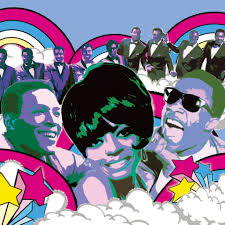
Diana Ross sang ‘Ain’t no mountain high enough’ and unleashed this now clichéd phrase on almost every song ever written ever since. Stevie Wonder became immensely popular in the 1970s and helped funk become a defined genre on its own merits.  Where James Brown had pioneered, so Kool and the Gang made sure the genre would die before the end of the decade.  Marlon Jackson and his other four brothers who I forget the names of, conquered the charts as the Jackson 5.  ‘I want you back’, ‘ABC’ and ‘I’ll be there’ all smashed the top 10 and helped launch the galactic solo career of their lead singer, Jermaine.

Jermaine thingy.
Willie Nelson wasn’t just a banned wrestling hold, it was also a popular country music artist and Nashville legend. Along with luminaries such as Glen Campbell and Tammy Wynette, country music was dotted all through the chart places in the 70s. This was helped by the continual repeats of Clint Eastwood films on TV on Sunday afternoons. Olivia Newton John, Marie Osmond and Kenny Rogers all pretended to be country artists at some point and managed to fool country fans into buying their records.

Willie Nelson, who has always been and will always be in his 70s
Olivia Newton John went as far as being voted vocalist of the year by the Country Music Association in 1974. This alone throws the entire genre into question. In fact, if someone had just twanged a comb on the side of a table and called it ‘country’ it would probably have been gratefully accepted. It enraged some country fans however, especially Hale and Pace who eventually let their anger go in the late 80s by singing ‘Let’s stonk, to the rhythm of the Honky Tonk’.

A pair of complete stonkers
Charlie Rich (who himself wasn’t a country artist but managed to get into the country music charts and win artist of the year at the CMAs) got so angry at non-country artists crossing over from other genres, that he set fire to the envelope containing that year’s winner, John Denver’s name (another non-country artist) at the CMAs in 1975.  That’s like a cat in a dogs home kicking off because another cat wants to come into the dogs home because the cat outside isn’t a dog (or something). Dolly Parton decided to stop all this nonsense once and for all by going fully ‘pop’ with her hit single ‘Here you come again’, thereby ending the feud, sort of, or something.

If anyone would, Dollywood.
The 1950s came back into fashion and at long last, people started wearing Teddy Boy outfits, greasing their hair back, dressing like thin-Elvis and playing double basses with their fingers.  The Stray Cats led the revival and Queen even had a stab, releasing ‘Crazy little thing called love’.  The movie ‘Grease’ went stratospheric being as it was full of 1950s kitch but the craze soon died out when Showaddywaddy stamped their ‘Butlins’ version of the fad on the top 40. It of course led to genuine 1950s and 60s artists coming back into fashion.  Ricky Nelson, Neil Sedaka and ‘Grease’ singer Frankie Valli all came back to the charts in a slightly different form. 

One of the objects in this picture is a huge mistake
Of the very sparse selection of pop music in the charts in this decade, Elton John and Abba were the two biggest exponents.  Everyone fancied the blonde one out of Abba but also wished he would shave his beard off.  The Beatles had broken up in 1970 and they all went on to have solo success. Paul formed Wings but everyone wished he hadn’t, John and George both had hugely successful solo albums and Ringo Starr. Pink Floyd’s pompous concept riddled mash of unrelated sounds, ‘Dark Side of the Moon’ remained in the charts for 741 weeks and sold over 50 million copies, somehow. It’s also cited as one of the greatest rock albums of all time, somehow.

Welcome to the most tedious hour of your life
Rock went all Pantomime when David Bowie decided to dress up as a futuristic space hero hell-bent on eradicating a race of mutant spiders who lived on Mars. Roxy Music thought it was a good idea, as did Marc Bolan although in their music there were more cars and abstract concepts than spiders.  Then glitter rock vanished, trampled on by bands like The Clash and the Sex Pistols who themselves vanished three years later when they all went their own ways.

Apparently this is how to live your life
The Bee Gees were single-handedly responsible for people wearing a white suit with a waistcoat combo, strutting down the street and pointing to the floor and ceiling alternately. John Travolta also had some input in that. As did the writer of the film ‘Saturday night fever’. And the bloke who invented the light-up disco floor. Oh, and the person who discovered ‘Wah Wah’.

Well you can tell by the way I use my wok, I'm a Chinese chef, no time to talk
The success of Bob Marley and Prince Buster allowed a reggae pre-cursor to rise to popularity among skinheads. ‘Ska’, which is Jamaican in origin and was first heard in the 1960s, was everywhere by the late 70s and had people with no hair pogoing about like they didn’t need their ankles tomorrow.  It led to the band ‘Men without Hats’ writing the song ‘Safety Dance’ as they’d been prevented from pogoing in the comfort of their own local pub one night. 2 tone bands of the late 70s combined old skool ska with melodies, faster tempos and elements of punk rock. The Specials, The Beat and The Selecter all embodied the genre before Madness took off like a helium aeroplane. If you look closely, you’ll find it very difficult to work out where the 70s ended and the 80s began - unless you also incorporate a calendar which shows December 1979.

"Hilarious" band, Madness.  As mad as a box of Prozac.
 
This is an excerpt from the book 'The worst pop lyrics in the world EVER!' by Peter Nuttall.  Available in Paperback and on Kindle here :
Barnes and Noble
Amazon


Saturday, 25 June 2016

An alternative guide to the history of pop music - Part 1 - 1950s and 60s

The inception of the pop charts and the 1960's
 

The popular music charts began in 1940 when the popularity of a song was gauged by sales of sheet music.  We can all agree there’s plenty of sheet music around these days but it all seems to get in the charts somehow.  The music magazine Billboard had the idea of compiling a chart based on sales which was then updated in 1952 when someone decided the best way to listen to music was to get someone else to play it and sing it and put it on a kind of plastic disc so you could listen to it whenever you liked instead of having the band come round and perform the song in your front room.
 

Hello? Dean Martin? Are you in there?
Back then it was called the Top 12! Twelve songs complied by ringing twenty record shops to find out what the best-selling songs that week were.  ‘Here in my heart’ by Al Martino was awarded the very first top spot, a song about ventricles, and began the tradition of listing things for no reason.  Other magazines got involved by 1955 basing their charts on postal returns or telephone polls.  Then album charts started somehow and the NME, Record Mirror and Melody Maker were all getting involved.  The upshot was, people were being told what everyone else thought was good music, namely the public, the radio stations and the record stores, but mainly the latter two.  It didn’t seem to matter what the singers were waffling on about, songs about how love hurts or how love is the greatest thing ever using lyrics written with crayons were flying up the charts and making songwriters stupidly rich. 
 
Chart topping cutting edge wailing
The 60’s is probably best known for the twangy guitars and tinny production of rock and roll, beat and pop music.  The Beatles were the forerunners of course, making monk’s haircuts fashionable for the first time since the Vikings invaded. The Monkees tried to copy but only two of them had a monk’s haircut and so were doomed to failure.
"We're not allowed to play our own instruments! Ha ha ha ha."
Skiffle became a novel way of utilising old kitchen equipment and brought success for the likes of Lonnie Donegan. Liverpool was a hotbed of music with over two bands touring the local clubs and ballrooms, using Buddy Holly as inspiration. The Beatles got good in 1962 and allowed other bands who wanted to be them, but weren’t quite as good, to get into the charts too such as Gerry and the Pacemakers, The Searchers and the Swinging Blue Jeans (getting their band name from the contents of their washing line on a windy day). 
Some bands were better than the Beatles but for whatever reason, didn’t have as much success; bands such as The Kinks and the Yardbirds.  The Rolling Stones emerged as a rival, sporting different but equally silly haircuts. Barber shops up and down the country had never been so busy. "I want to hold your hand" was a lovely title for a song and a very respectful thing to say to a lady.  Towards the end of the 60's, out went Fats Domino to start a pizza shop, Chubby Checker (who despite his name, never checked chubby people) and even Elvis began to struggle in this new rock and roll tidal wave.
 
Elvis, contemplating a white jump suit, massive sunglasses and a cheeseburger
Rock music began to splinter by the mid-decade into various genres.  Psychedelia was one of those, based on making your mind ignore reality with or without the ‘help’ of various chemicals.  Sitars and surreal lyrics became the identity of the genre as well as weird noises, hidden messages and atmospheric effects.
 
This is all Bob Dylan could see for the entire decade
Folk music came back to life for a moment and gave people like Bob Dylan, Joni Mitchell, Leonard Cohen and Gordon Lightfoot a reason to get out of bed in the morning. ‘Protest songs’ were the in-thing even though people also protested against protest songs although I’m not sure if they wrote songs about their protests against protest songs as that would have been hypocritical.
The sound on The Byrds’ ‘Mr Tambourine man’ was obtained with a 12 string guitar, which in my opinion is far too many strings. Folk rock reached the peak of its popularity in 1968 before it tailed off into country rock and various other denominations of rock music. The first psychedelic rock song was called ‘hesitation blues’ and it was a song nobody was sure when to start playing.  The Doors became popular and opened for many acts, they also closed for some too; sometimes however, they were just ‘ajar’. Psychedelia had its last hurrah at Woodstock in 1969 and was never heard of again.
 
Worst Drive-in Movie Ever!
The music we associate most with American teenagers in the early 1960s is surf rock; something that usually results in your surf board being broken in two and you upside down in a rock pool. ‘Movin’ and Groovin’’ by Duane Eddy was one of the first surf rock songs and despite many other Californian surf rock bands popping up, the Beach Boys not only played the music, they named themselves after somewhere you can actually surf! Genius. 
Pop music was as superficial as ever with hits like ‘The Twist’ and the ‘Locomotion’ getting us all on the dance floor to do weird angular upper body movements and songs such as ‘Sugar Sugar’ which sparked the term ‘Bubble-gum pop’. Motown emerged as a pop answer to soul music and one of the greatest genres of music was born. A never ending string of number one singles followed for The Supremes, The Miracles, The Temptations, The Four Tops, Martha and the Vandellas, Marvin Gaye and the Jackson Five
 
The sad thing about Motown is that there'll never be anything as good ever again
Sam Cooke was flying the flag for soul and James Brown was bringing funk to the masses. The beginnings of disco music can be heard in the Supremes song ‘You keep me hanging on’.
Television brought country music into people’s homes and raised its popularity. Records by Loretta Lynn, Glen Campbell and Tammy Wynette were flying off shelves in local record stores. Marty Robbins managed hits in country, western, pop, blues and Hawaiian (that’s straight pop whilst eating some  ham and a pineapple). Johnny Cash became one of the most influential musicians of the decade (and most other decades for that matter) recording in many styles, genres and prisons. Dolly Parton came down from the mountains in Tennessee to capture the hearts of a nation with her biographies set to music.

And then, it was over.  1970 came along and ruined everything...


This is an excerpt from the book 'The worst pop lyrics in the world EVER!' by Peter Nuttall.  Available in Paperback and on Kindle here :

Barnes and Noble
Amazon


Friday, 8 April 2016

What is the point of Midges? Seriously.

Spring.  When the world comes back to life, flowers bloom, warm sun hits your face and clouds of tiny pointless flies hang around in groups and get right in your face. 

Some biologists have postulated that sea sponges are one organism while others suggest that they are in fact a bunch of unicellular organisms that are lonely and have decided to hang around each other for their entire life.  It’s an interesting theory supported by the fact that if you put one in a blender it will merge again in exactly the same configuration [I'm not sure if that's true actually but it seems plausible].  

Perhaps Midges have adopted the same concept as sponges.  You’ll generally find a cloud of them, buzzing around each other, hovering mouth-height above country paths and the like; generally getting in the way and doing nothing of note.  Are they actually individual Midges or are they in fact one large Midge with the soul purpose of getting in jogger’s mouths?  

I once ran into the middle of a cloud of midges, hacking my hands through it like a deranged Kung-Fu master for a good five minutes, yet when I stopped and stepped to the side, the cloud reformed with the exact same configuration of Midges. 


Some Midges, yesterday.

            Just as you or I would cross the road should we see a group of undesirables hanging around outside the local corner shop, flies change direction when they encounter the Midge cloud.  It can be so humiliating for gnats as they bumble past having to put up with the abuse those Midges throw at them.  Physically, the gnat is no match for the Midge cloud.  Midges are so tiny, they can play chicken with spider webs.  The most daring of the group can overthrow the leader by flying through the centre hole of a spider web without being tangled.  Perhaps they have the ‘Midge book of records’ where such feats of daring have been documented?   

No one has seen a Midgie eat (apart from weird scientists with nothing better to do and a massive microscope). More to the point, no one has seen them sleep.  Are they flies like you and I know them?  Bluebottles are big and scary but at least we know what they are and what they get up to.  They tend to live on window sills, usually on their backs buzzing convulsively for four seconds every ten seconds.  They also have the unfortunate disability of not being able to see glass although they are drawn towards it magnetically.  Even when you open a window for a Bluebottle, it will continue to head-butt the glass until you coax it out with a rolled up newspaper.


"What are these 'windows' of which you speak?"


            Flies have featured in many horror films such as ‘The Amityville Horror’ and ‘The Fly’.  They have this sinister air about them, possibly something to do with the fact they throw up on their food before they eat it – yet there are not many films that feature people who have just bought a kebab after drinking twenty pints.  Midges have been underused in films in my opinion.  Surely George A. Romero can’t be far away from ‘Land of the Midges’ or ‘Planet of the horror midges from hell’ in which endless clouds of tiny flies end up in the mouths of everyone competing at the Olympics.

Thursday, 9 October 2014

What have I done now?

It’s an odd emotion, guilt.  People refrain from committing many misdemeanours for fear of either getting caught or that their own conscience will betray them.  Stealing a few sweets from a shop is no different to pinching a box of pens from your work place and they can both hang on your conscience.  This is truer when you are young, although parents had strange methods of dealing with misbehaviour.

My particular favourite parent-ism was when they’d threaten to do to you what you were planning to do to someone or something.  For example, you’d say something like, “I’m going to cook my tea” and they’d reply, “I’ll cook you in a minute” or “I’m going out” and they’d yell back, “I’ll going out you in a minute.” Apart from making no grammatical sense, you can only assume they are trying to mess with your head enough to confuse you into rethinking your intentions.  You could play this to your advantage if the offending parent was in a bad mood by saying something like, “I’m just going to make tea for”, to which the response would be, “I’ll make tea for you in a minute!”

Another favourite threat was, “I’ll knock you into the middle of next week”.  I was particularly keen for this to happen as I would have gotten my pocket money early and repeated beatings would have resulted in me being extremely well-off and a few years nearer my 18th birthday.  Turning up for school a wealthy twenty-four year old while all of my friends were still eight, would have been weird.


I’m 14 and I’ve got £45!!

Of course, parents shouldn't hit their children, which is wholly positive and therefore means alternative punishments have to be meted out to children for their misdemeanours.  Sending a child to its room no longer has the effect it did when I was young.  Invariably, every child has a DVD player, computer, games console and an exotic pet in their bedrooms these days.  Surely it makes more sense to send them to a different room in the house for a few hours - the bathroom for example.  Not a lot of entertainment in there apart from perhaps using a towel as a Toga and re-enacting the last days of Rome in a role play with themselves in the bathroom mirror.

They say if it’s not broken, don’t try to fix it.  In Dads’ cases it should be if it is broken, don’t try to fix it.  If something was broken, any child in the household would invariably get the blame for ‘fiddling’ with it.  It’s ok though because all Dads are trained electricians and carpenters; they all have sheds with tools in that they have no idea how to use and a tool box full of things that just go rusty through lack of use and a hole in the shed roof.  They take the cover off the broken electrical item, stare into it for a few moments then start jabbing around at the circuitry with a screwdriver and no agenda.  They then make noises that lead you to think they’ve found the problem, poke around for a bit longer, perhaps even remove something then put it back in, replacing the cover with a satisfied nod.  They plug it in, switch it on, wait - then say, ‘It’s broken’.      

Sunday, 10 August 2014

Haven't I seen you somewhere before?

It’s always awkward when you see someone you haven’t seen for years.  It’s normally someone from school or somewhere you used to work and you see them sitting on the bus or shopping in town.  It’s a situation you can’t escape – you've seen them and you realise that they've seen you too.  You could be brave and acknowledge them, hoping to recount tales of yore. Stories such as the time the chemistry teacher left the teaching lab for five minutes, returning to find the room stinking of gas and a first year on fire in the corner or the time your boss fell down the stairs and both her shoes flew off.
            The conversation invariably starts with a nervous, ‘So, what have you been up to?’, answered with either an indifferent, ‘Nothing much’ or an in depth account of the three divorces, five kids and eight jobs they've had in the 2 years since they last saw you.  Even more uncomfortable however, is the meeting in the shopping centre.  You’re power-walking to your favourite fast food outlet when out of the corner of your eye you see an ex-‘colleague’.  You have to stop, raise your eyebrows and look genuinely pleased to see them, though you made no effort to stay in touch after they were made redundant and you kept your job.  “Where are you working now?”, the conversation starts, “I’m not”, comes the inevitable reply followed by the tale of depravity.  The conversation also includes lots of fake smiling and nods of false surprise at the current situation they find themselves in.

"Who is he again? Oh, it's that boring idiot that used to... Hey! Lovely to see you again!"


            The worst of these meetings comes in the supermarket.  You’re sauntering up the poultry and game aisle, checking the sell-by dates and that ‘corn-fed’ actually means that the animal in question has been fed on cereal and not on bits that fell off the farmer’s feet, when the ghost from your past floats up the aisle towards you.  Much as you’d love to chat, you make the excuse that there are other trolleys trying to get past and you must move on, but it was wonderful to see them anyway.  You reach the end of the aisle and turn into the Oriental and Mediterranean sauces aisle, forgetting that the person you just exchanged pleasantries with would also be turning into this aisle from the other end. You stoop to study the Ragu until they pass, hoping they wouldn't try and speak to you again.  You then formulate a plan; you must either miss an aisle to ensure your respective journeys are out of kilter and so avoid another uncomfortable moment or hang back and hope people think you are health conscious, studying the nutritional value of the jar of Dolmio you've been staring at for the last five minutes.

"You're buying a Baguette, ey? Well, see you later!"

            Lastly you have that chance meeting with a person you only ever had one thing in common with, like the love of a sitcom which finished years ago but fails to go away due to the 'Gold' channel on Sky.  I knew such a person and the only thing we had in common was an English teacher at school with a strange accent.  Whenever we saw each other we’d go ‘You’re not allowed to do that’ in a Cornish-cum-Scottish accent and then giggle like twelve-year-olds; only because we were actually 12 at the time.  Six years later I saw him approaching from the opposite end of a corridor in a library.  Horrifically, we made eye contact at twenty metres.  We couldn’t maintain that eye contact for the full fifteen seconds until we met in the middle.  I had to feign interest in passing posters and missives pinned to the wall, my shoes, the ceiling tiles, the exquisite view of a brick wall out of the window, my shoes and the posters once more until we meet, grin, raise our eyebrows and say, “So, what have you been up to?”.     


Sunday, 11 May 2014

Trolley rescue - the sixth emergency service

The police have a hard job; making the streets a safer place to walk, making sure cars aren’t parked in places where pushchairs can’t get past and seeming not to care when you have a crime committed against you.  The people of the Fire Service also have difficult jobs, as do Paramedics, the coast guard and the AA.  The sixth emergency service however, has things a little easier.  Whilst shopping in a local supermarket recently I noticed a telephone number on the handle of my trolley.  It instructed me to call should I witness a trolley that is 'lost'.  I assume it meant 'away from where it's supposed to be' rather than struggling with it's emotional identity.


On my jaunts to the surrounding countryside to where I live, I invariably see supermarket trolleys, wheels up in a small brook or on their side in a bush by the side of a disused railway track.  My mind doesn’t immediately wander to the pointless hooliganism that is the theft of these trolleys to be abandoned in such places but the sheer admiration of the guile and determination of these people to get the trolley so far away from its starting point without being seen.  I also find myself awestruck by the places these people can put the trolleys when they abandon them.  Up trees, down ravines – I once saw one over a give way sign.  It gave me an idea; just how far will Trolley Rescue go to recover a trolley? 


If this was a TV documentary, I’d place a trolley somewhere, ring the number and wait.  Throughout the programme, I’d place trolleys in increasingly precarious locations and situations.  The first I’d place just outside one of the trolley bays in the supermarket car park – just to see if they treat it as a crank call or a genuine cry for help.  The second I’d place on the pavement just outside the car park to see if they send their special ‘recovery vehicle’ or just the guy in the yellow reflect-o-coat.  (You can buy those coats on the high street.  All you need to do is print the logo of your choice on the back, ‘Security’, ‘Attendant’ or even ‘Whisperer of Destiny’ and you can just stand around telling people to do stuff; and they don’t question you – they just nod and do it, even if you’re just in a random street).


Trolley Resuce Motto - "We are ready to retrieve you"
 

The third I’d place in a quiet suburban road, the fourth would be placed on the grass in the middle of a busy motorway roundabout, the fifth in the lion enclosure at the zoo and the sixth up Mount Snowdon.  Surely there will be a point where the cost of recovering the trolley will outweigh the value – we just have to find that line.

I also wonder if they do get crank calls.  Trolley rescue, “My trousers are in next doors garden and they have a big dog!”